
Because It's Easier
What gets us high doesn't always make us better

In the past, much of my writing on fitness was seen as critical and done from a position of imagined superiority, of “I know and do better”, although that was rarely the intent. More often than not I was shouting about the elephant in the room — human nature — and how we ignored its subversive influence on our thought and actions, how we took ethical and physical shortcuts and claimed they didn’t affect the immediate outcome or our future beliefs and behavior.
I haven’t written much about fitness and training in the last few years. Part of that is disinterest but I also wonder whether the authority of my voice — once valid due to my intense practice in that context — matters at this point. Besides, I thought folks had it all figured out. Many certainly claim to but a couple of things happened recently that remind me how human nature affects all beliefs and behavior, and sometimes its effect is stronger than any conscious actions taken to oppose its influence. Those recent events made me want to share observations from my current place, and season in life.
The first incitement proves that, when faced with any difficulty and offered the time and opportunity to consider and practice, our natural tendency is to seek the most efficient means of addressing said difficulty even when we made the conscious choice to impose it on ourselves.
The second example reminded me of a position I once took about the training I saw being done; we believe that whatever we are doing takes us closer to our objective, and that result X proves the Y thesis. Having a loosely defined goal makes it a lot easier to maintain belief in the rightness and results of our actions while a more precise objective, tied to a meaningful test would quickly cure us of such self-delusion. I once wrote, “don’t continue doing the thing that gets you high and strokes the ego while tricking yourself into believing you are still reaping benefit,” and had to say it because positive feedback and intensity do get me high. It doesn’t take much. And it’s easy to mistake the high for the objective. Or to get high over and over because it feels so good — even if it’s not taking me closer to my goal. I’ve seen the trap and stepped into it plenty. Once I realized what was happening, that I was addicted to intensity because it provided quick and flattering evidence of progress and that I was avoiding the fundamentals of volume and consistency placed atop a solid foundation, I stepped back to critique my behavior.
I realized how easy it is to sharpen a blade made of good and properly tempered steel; that’s what intensity is for, and should be used appropriately. Continuous attempts to sharpen steel that is soft, or porous and riddled with voids from improper casting are of little value but that’s the trap we fell into. We made up tests and allowed our nature to convince us the results proved what we thought they did. The times and points and kudos were just polish on an unstable stable foundation; the new method addressed fitness from the top down while consistent, repeatable progress may only occur when we start at the bottom and build upward.
And with that preface, here I go.
/
Blair showed me a photo she snapped in the gym the other day and I asked, “Why is he doing it like that?” Her reply surprised me, “Because it’s easier.” And a whole lot of years of frustration and thinking rushed me, reminding me of the confrontations with human nature — both within and without — that have been my constant companion.
Why would he try to make it easier when he’s trying to make himself better? I mean, he’s training, right?
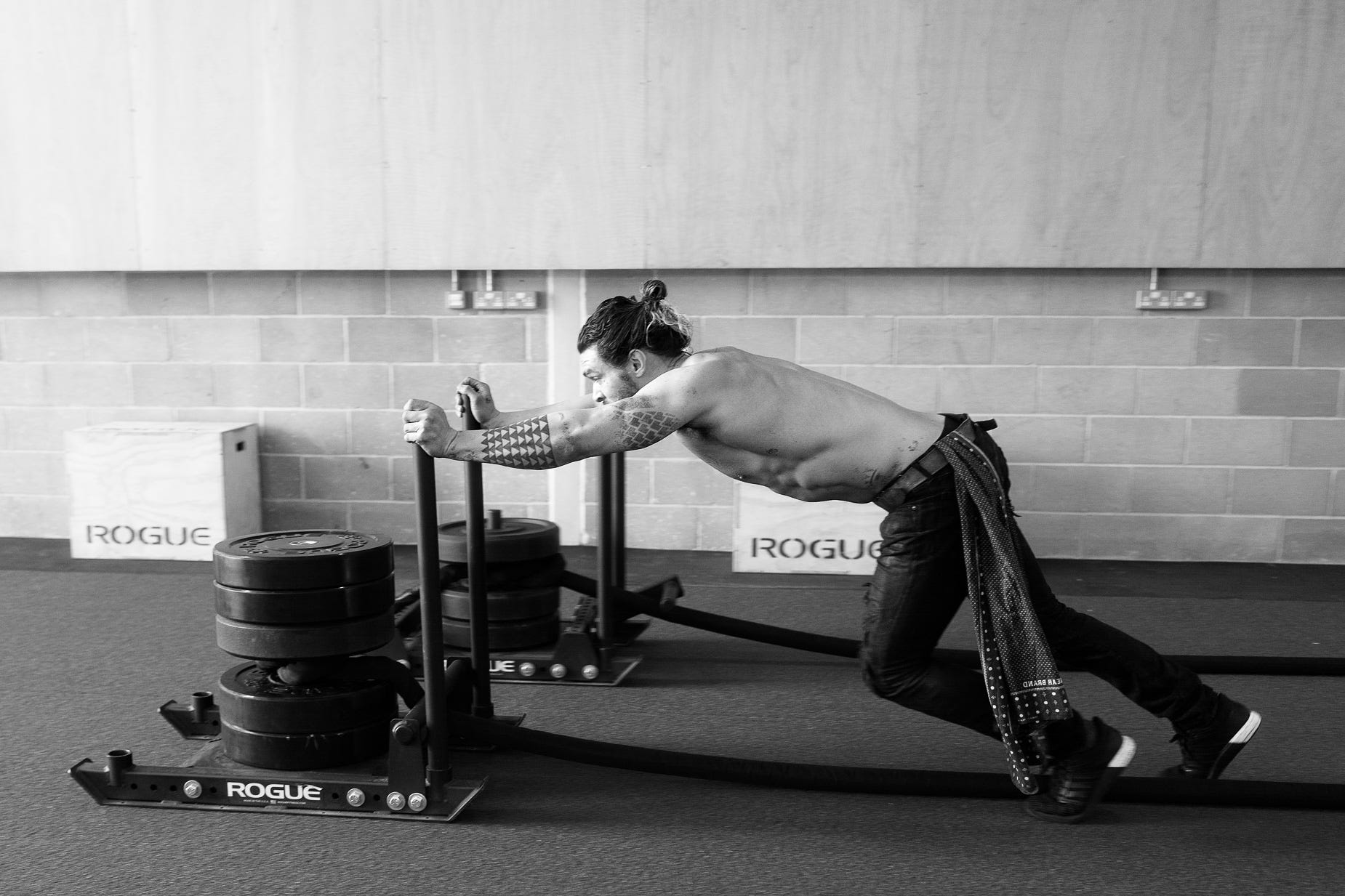
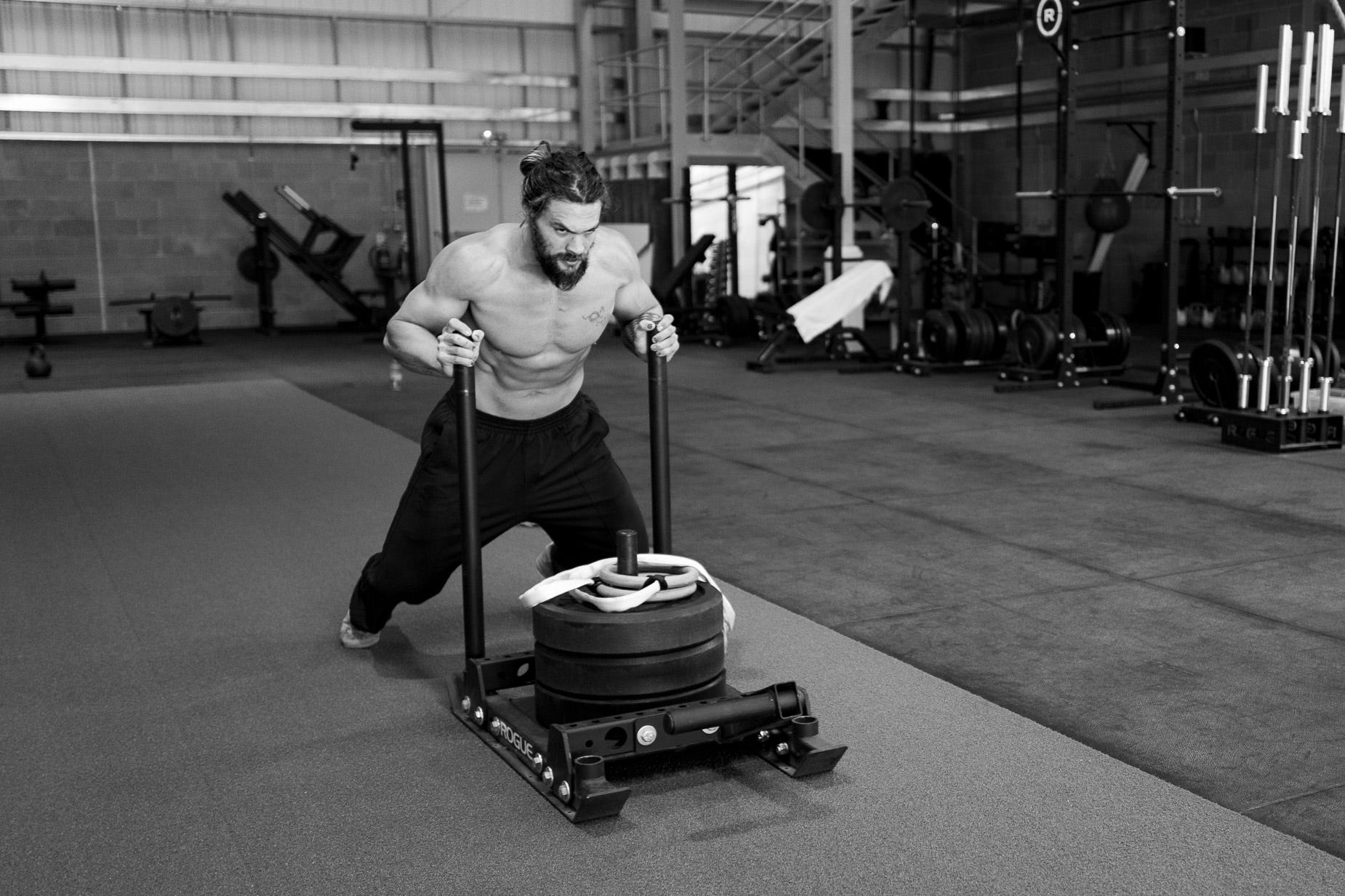
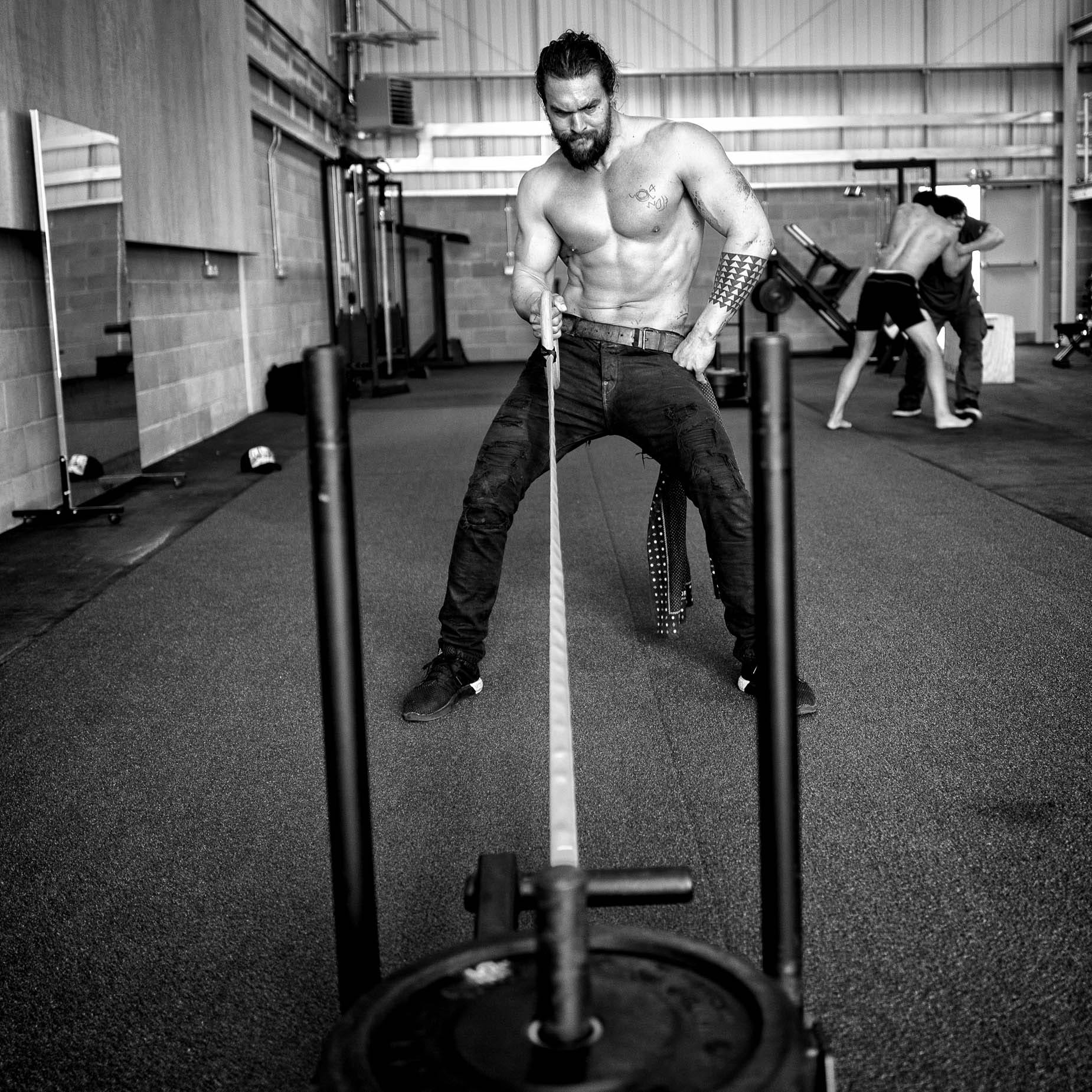
The photo showed the protagonist pushing a sled with arms hooked around the upright posts, which settled into the crook of the elbow. The mechanical limitation of this position — the arms can only be pushed to the rear so far before skeletal structure and connective tissue resist further movement — reduces both lever length and the volume of (consciously contracted) muscles required to control the sled. The shorter lever means force produced by the legs and hips is transferred to the sled with less core engagement and without the shoulder stabilization required by a standard, straight-armed position shown in the photo above. This also allows the player to breathe without inhaling against the resistance created by great core tension. I believe this tension is one of the objectives of the Sled Push. I also believe that the shoulder engagement should be welcomed, not avoided. The Sled Push challenges a number of physical attributes — core-to-limb integrity being one — and not all of them obvious, especially when the movement is described glibly as, “a great quad burn.”
I was surprised by the position because I believe training should be IN-efficient, and difficult. Training is an attempt to change the condition of muscle and connective tissue, the energy system supplying them, and to cause adaptation and improvement. Evading the difficulty one consciously sought in order to produce that change does the opposite. Our nature seeks efficiency and if we aren’t stridently aware of that nature it can sabotage our consciously chosen processes.
Of course, during performance and competition one should seek efficiency, spending resources with the greatest possible economy while still accomplishing the task.
We triggered our efficiency-seeking nature when we began to treat training in a gym as if it was competition. This helped to motivate the unmotivated, and gamified what was often considered drudgery. It created an entire market, awareness, terminology, focus, and was a good thing overall because it drew more people to a lifestyle of movement and fitness and dietary awareness. But once the lack of transferability (to actual sport*) became apparent, once the injuries showed a consistent pattern, once the anticipated results did not play out, well, we should have changed course, objectives, and the language and behavior to achieve those outcomes. Human nature is a stubborn brute though.
Recently, I watched video of a fellow executing a named, circuit workout for time, intent to show that — unlike the workout name suggested — the 60 Burpees in a row that come late in the progression aren’t that bad. I appreciated his acknowledgement that greater capacity and a shift in attitude (and language) can change the nature of a task and the experience itself. And there it was, no drama, simply doing the work, economically, smoothly, and the Burpees didn’t change that. His time was about 7% faster than a prior best effort, which means ... something.
One fellow watched the same video of “Those Burpees Suck” and suggested the bar had been raised because the player completed the workout faster than he previously had, perhaps even setting a record. The inference is that he trained hard enough to improve his physical fitness, which could be true, but it’s not certain or the sole characteristic being ‘tested’. Rehearsal may have led to better pacing decisions. Moving the apparatus closer together to speed transitions also affects the time. Short-stroking some movements allows marginal gains that, when summed, reduce total time. Sleep, diet, emotional state, experience, the soundtrack, etc., all play a role. In the long term progression of a training program, accomplishing the same work in less time only matters if you identify a specific factor that affects the outcome, focus on it, and practice and/or train it enough to improve, and then do so repeatedly until that focus stops producing results.
Trying to do the task faster is obviously valid, and to some degree, useful. Sadly, reducing one’s time often results from having shortened the course, from having made the work easier. When we shorten the course but call it the same thing the result — or at least any comparison — must be questioned. To compare one time or outcome to another each test or race must be the same; to compare a 380m run to a 400m run and congratulate oneself for being faster is invalid. I am not insinuating that’s what happened in the case of this workout but I am saying it. If our objective is to make ourselves better we should never allow ourselves to make the task easier and then measure it as if we hadn’t.
If the prescription is for chest-to-floor Push-ups but chin-to-floor are done, the work is easier. If a fully erect posture on top of each Box Jump is prescribed but the player merely hunches on the box before stepping down, the course has been shortened. If chest-to-bar Pull-ups are assigned but chin-scratching-the-underside-of-the-bar are done, what do we call it?
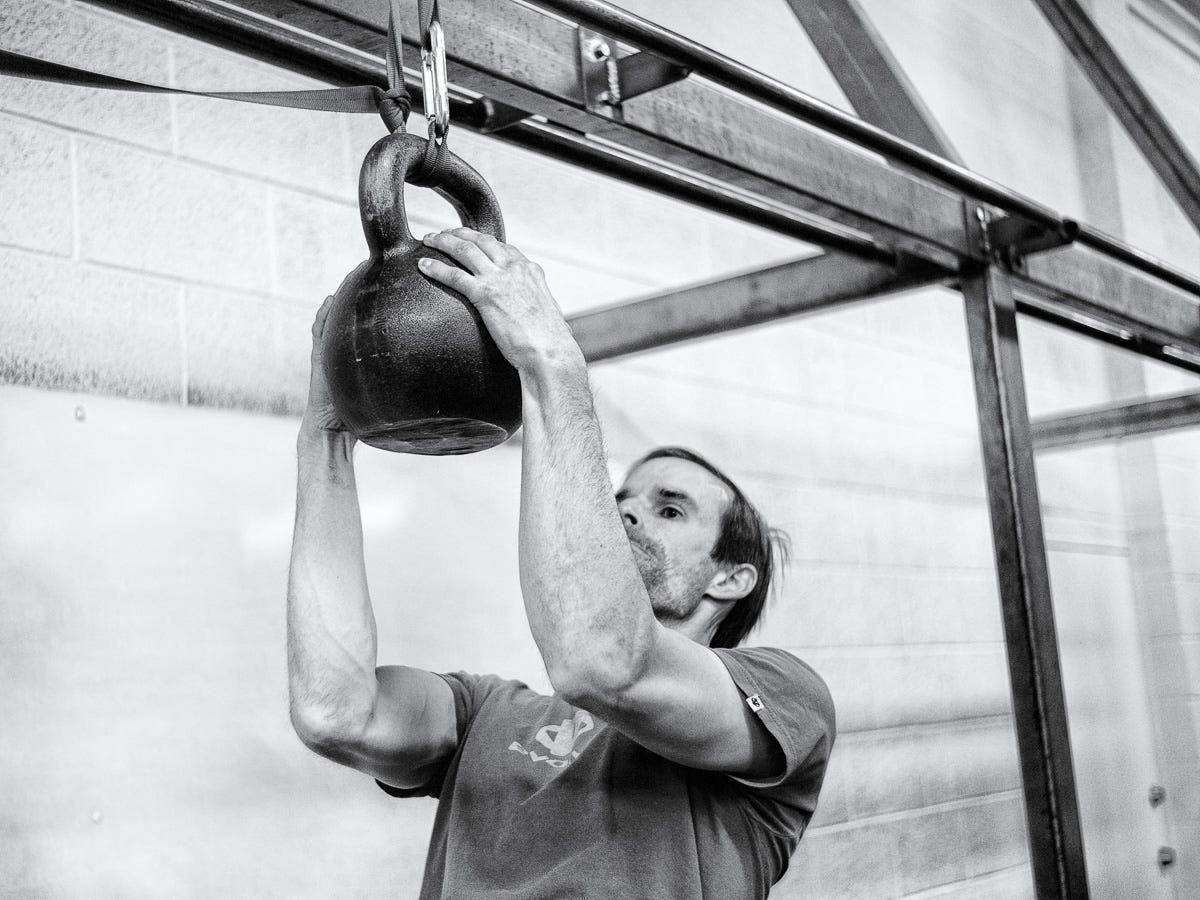
As an aside, yes, Butterfly Pull-ups are a fine movement, and useful in the specific context of initiating movement from the core and harnessing momentum, etc., but they do not improve one’s ability to pull outside of that context — at least not in the way that a one-arm pull-up while holding a 26-pound Kettlebell in the opposite hand will do.
A few days after his effort the protagonist in the video read the standards for range of motion I published when I was setting and enforcing them at my old gym and concluded that he hadn’t adhered to the standard so admitted, “No FKT for me.” I admire that.
I am grateful too that these events got me thinking about fitness, my current perspective on it, and how my relationship with it has evolved with time, changing areas of interest, mileage, which I call mile-AGE, injury, and experience.
I suppose I should write more about that because none of us are getting any younger.
Footnote:
*Yes, in the unfit or intermediately fit a general increase in physical fitness can improve sport-specific performance, especially in field sports or events where physical fitness is a determinant factor. Increased fitness, which includes recoverability (between efforts) can also improve sport performance by allowing a higher volume of technical, sport-specific practice to be done. But simply assuming that better fitness means better performance isn’t accurate.

Glad you're on substack.
You had a profoundly positive influence on my life as far back as 2008, when you recommended reading Good Calories, Bad Calories.
I enjoy your writing because it applies to a lot more than physical training.
You know... if you put enough weight on a sled being pushed on a rubber floor, the floor will start to burn. As the runners heat up, they also start to stick more, meaning that each successive attempt to move the sled gets harder. At a certain point, the sled can no longer be moved, despite the load staying the same. This is a bit like pushing/pulling a heavy tire on its side on asphalt. It gets worse the more work done. This becomes an exercise in mental fortitude as much as it is physical work. The task becomes harder the more you do.
I don't really care that much about how someone pushes a sled. Change the way you push it to gain a mechanical advantage and we simply increase the load until you hate yourself. If you want to challenge the posterior chain, and the muscles involved in hauling dead weight through snow... use whatever position allows you to load that tissue and then maintain a lot of time under tension. The real issue is trying to make it easy and call it the same work.
Though personally, I take more issue with the fact that most sleds are pushed on turf. Or they get wheels.