
Habits and Patterns
Take care of the mind and body you are stuck with for the rest of your life

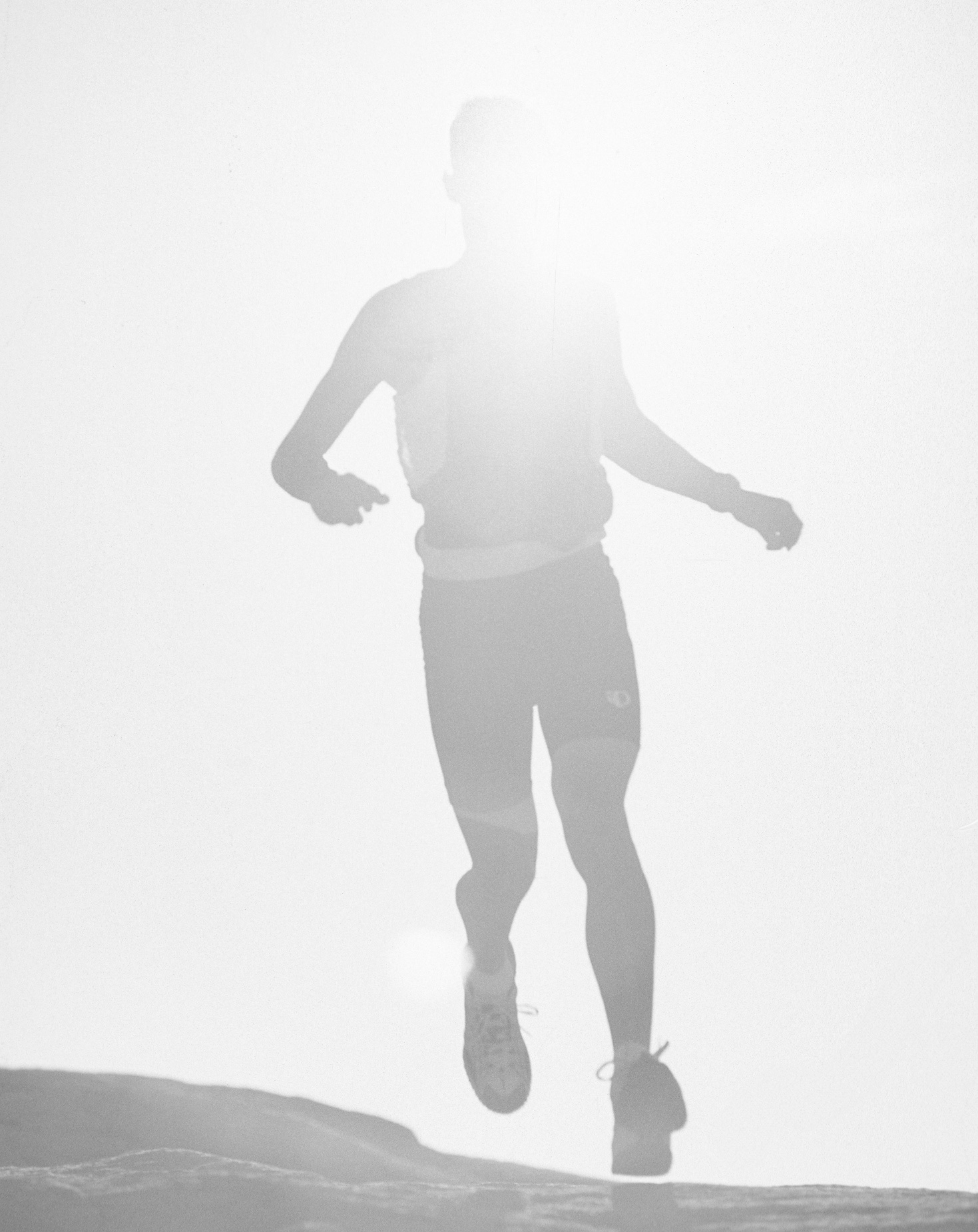
I wrote this in October 2015, one week after writing the Plasticity essay. For a while I had been trying to learn how to run, to move faster than the uphill-like slog or jog that would have accurately described how I locomoted at the time. It reads to me now as a good examination of just how hard it is to change behavior, specifically unconscious behavior, and especially physical movement patterns and responses ironed in to our bodies by years of practice. It's about running but applies to many behaviors, physical and otherwise.
The period described here happened just ten years ago but the mileage on my body had already accumulated to the point of limiting certain movement. And while low-impact activities would have been the wise decision I chose something more destructive than what I had been doing. Three years later I had my first hip replaced, then some other interventions in the years that followed. I think this side journey into running faster accelerated the ruin of various and necessary bits of cartilage. That destruction would have occurred anyway, perhaps over a longer timeline with less actual pain, but the impact of this focus sped up the decline, which may or may not have been a good thing.
/
I’m that guy. I joined the local 10k this morning. I participated. I did not race. I knew my place. I ran my last foot race 40 years ago, as a freshman on the high school cross-country team.
I wanted to do it then, and thought I could. I loved it when we hit “Bitch Hill” on the Woodland Park course and I killed myself on it every time we raced there. But I was short, and weak, so no matter how much I wanted it I couldn’t keep up with the field and I paid heavily for my efforts on the hill, which we climbed early in the race, when it came time for pace to make a difference.
I didn’t care about strategy, I just did what I wanted when I wanted to do it. The results of that clearly proved I wasn’t in the right sport.
Eventually, I discovered what I was meant to do and doing it shaped me. Later, after I quit climbing, the bike helped fill the void created. It wasn’t easy to adapt but I did and I had a couple of good seasons where what I wanted to experience and what I could actually do coincided.
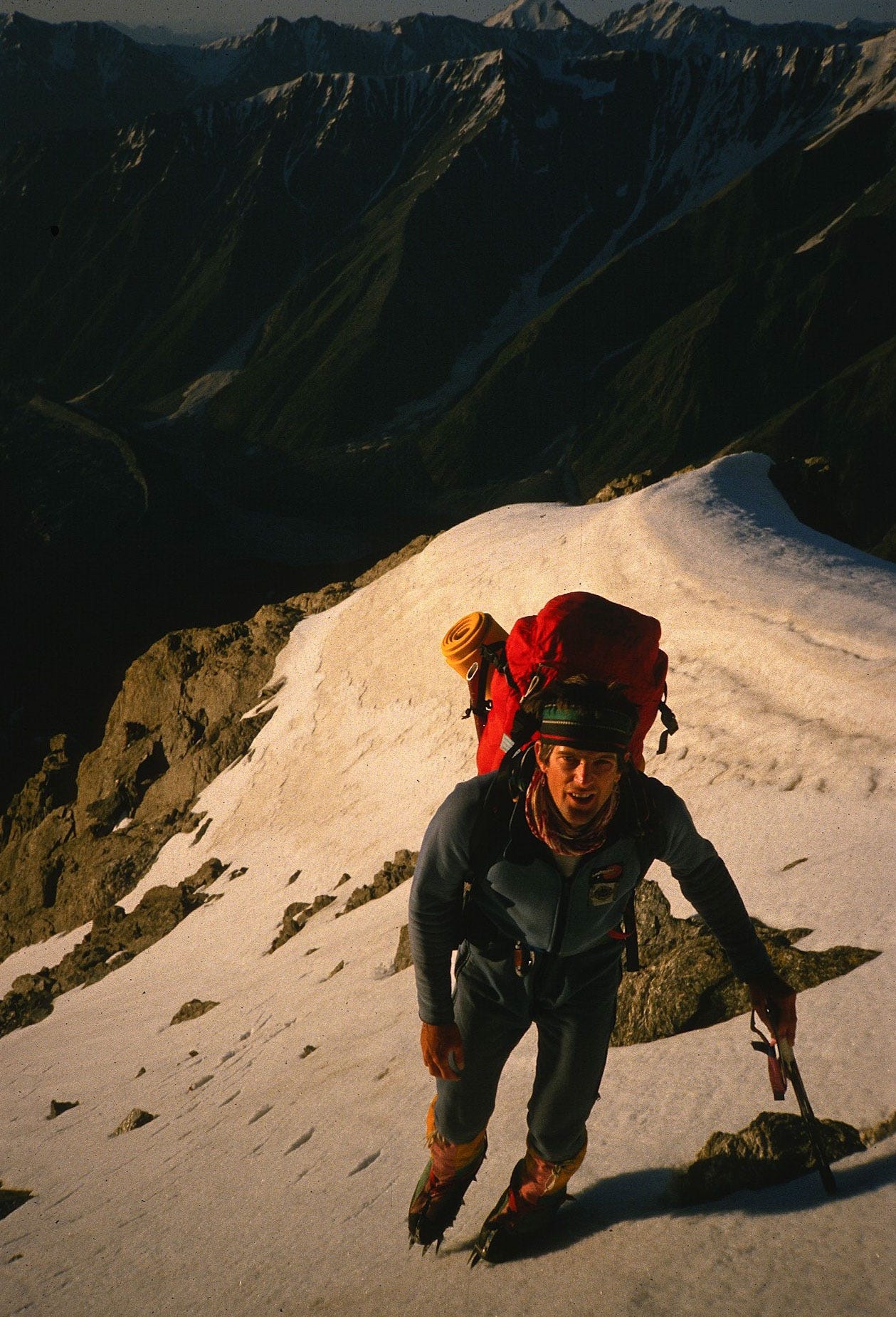
To change patterns hardened by years of hiking, uphill, often with a loaded pack, might be more difficult than learning to ride the bike, which was different enough that I could write new code instead of overwriting what I’d already written and practiced so hard.
I walk. I walked. And the way I did so was faster than many of my climbing contemporaries could. That speed carried over when the terrain steepened. I climbed some routes faster than anyone had before or since. My (1988) record on “Slipstream” still stands but even when I was speeding up and down mountains I couldn’t match the pace set by others on the trails in the valley. I was a specialist, with all of the limitations that come with it.
Sometime in the early-2000s I was at an event where different shooting sports disciplines were presented to the public. After I helped out with the USPSA aspect I tried a short summer biathlon (running instead of Nordic skiing). The national team members presenting that event asked me what was up with my running style, and commented, "You lean so far forward that each step looks like you are trying to keep yourself from falling over, which is slow, and tiring. You need to be more upright, and think about leading with your hips instead of your forehead." They weren't wrong, and since I'd never seen myself run I had no idea how well I had adapted to hiking uphill, carrying a pack.
Earlier this year I decided to try to relearn how to run. I don’t hike uphill much slower than I could at my peak but running is totally different. The movement patterns I developed at one speed, on specific terrain, and ironed in over decades of repetition actually contradict what I want to accomplish right now.
My friend Cole suggested that tuning my fitness — established during the course of my whole conscious life — and changing the movement patterns would be, “like turning a ship. It will take time.” After my race today I’ve accepted it might be like steering an oil tanker that has 50 years of momentum. The good news is that age also confers a certain patience. I know I can’t have it tomorrow, nor do I need it then, so I’ll make the incremental changes I know will be stable, and sustainable.
Even if I’m not fast on my feet at least I’m not afraid of trying hard. I can dig deep. In previous essays I’ve discussed the difference between the ability to hurt and the capacity to suffer. Some can hurt: nuking themselves with short, high-intensity efforts. In fact, this is a characteristic of many guys who train in the gym. On the other hand, several of us have developed the capacity to suffer, to go relatively hard for a long, long time. The psychology is different. The fitness traits also differ.
I’ve gone for 63 hours non-stop in the mountains. I’ve raced my bike for nine hours in one-day events and done multi-day stage races too. But those efforts all offered periods of respite, when I could draft, or coast, when the pace slowed enough to allow me to eat and drink. Today I finished the course in 52 minutes of sustained effort. Within a few hundred meters of starting my heart rate was at 90% and it stayed there — climbing to 94% at its peak — until I crossed the line and allowed myself to walk. I never “hurt” but I did do some suffering. Slowly.
The point here is that I’ve chosen to pursue an activity for which I have no efficiency. From which I get little positive feedback in a comparative sense. Sure, I’ve not run six miles in a row as fast as I did today but a lot of others were faster. Much faster. Many people I wouldn’t consider fit if I saw them in the grocery store ran faster than me.
To improve I will actually have to work hard, and smart. The technical lessons Julian Goater introduced me to last weekend were in my head today but not beneficial. I could apply them, and I felt my speed increase but the cost (of the conscious, unfamiliar effort) was too high so I couldn’t maintain it.
Wholesale change isn’t easy. What I did correctly to achieve one goal isn’t right for another and this is a difficult concept to face for anyone in any context. We want to keep doing what we are doing because it got us where we are. And that success, if it is such, reinforces our behavior. We want the same behavior to carry us toward the goals our current condition helped us to imagine. But it won’t.
The sooner we accept this the sooner we can take steps toward our new objective. Such vision and change is essential to continued growth, and evolution. Knowing this doesn’t make it easier. If I can’t instantly change simple biomechanics to run faster and more efficiently how can I expect to change the way I think and see without considerable and consistent effort?
What makes me happiest about this new challenge is that I’ve taken care of my engine (the joints are another story), and endured and experienced enough along the way to be in position to learn and apply new lessons. Every day I look around me and I’m saddened by examples of people who didn’t, who gave up early, or never learned the comfort that derives from self-imposed discomfort, from wanting and working for more.
If there is one lesson I would teach to someone half my age it would be that: work harder than you think you need to, and take care of the mind and body that you are stuck with for the rest of your life. “Take care” doesn’t mean avoid, it means think ahead, weigh the cost of what you want now against what you might want in ten years, or twenty. You will probably live longer than you think. The habits and scars you create now will sink their roots. If you don’t keep enough strength and resilience to combat those roots they will eventually hold you down.

Amen, the wheels really want to fall off the bus. Orthopedic surgeon on speed dial is somewhat of a reality. But like the shark analogy, stop moving and you die....
"...think ahead, weigh the cost of what you want now against what you might want in ten years, or twenty."
Pauline explains this concept to patients in clinic most days. Trying to get a person to realise that what we do now affects later.... very difficult when now is set in stone/rut/grave.