
Overreaching
Dig deep, dig yourself out

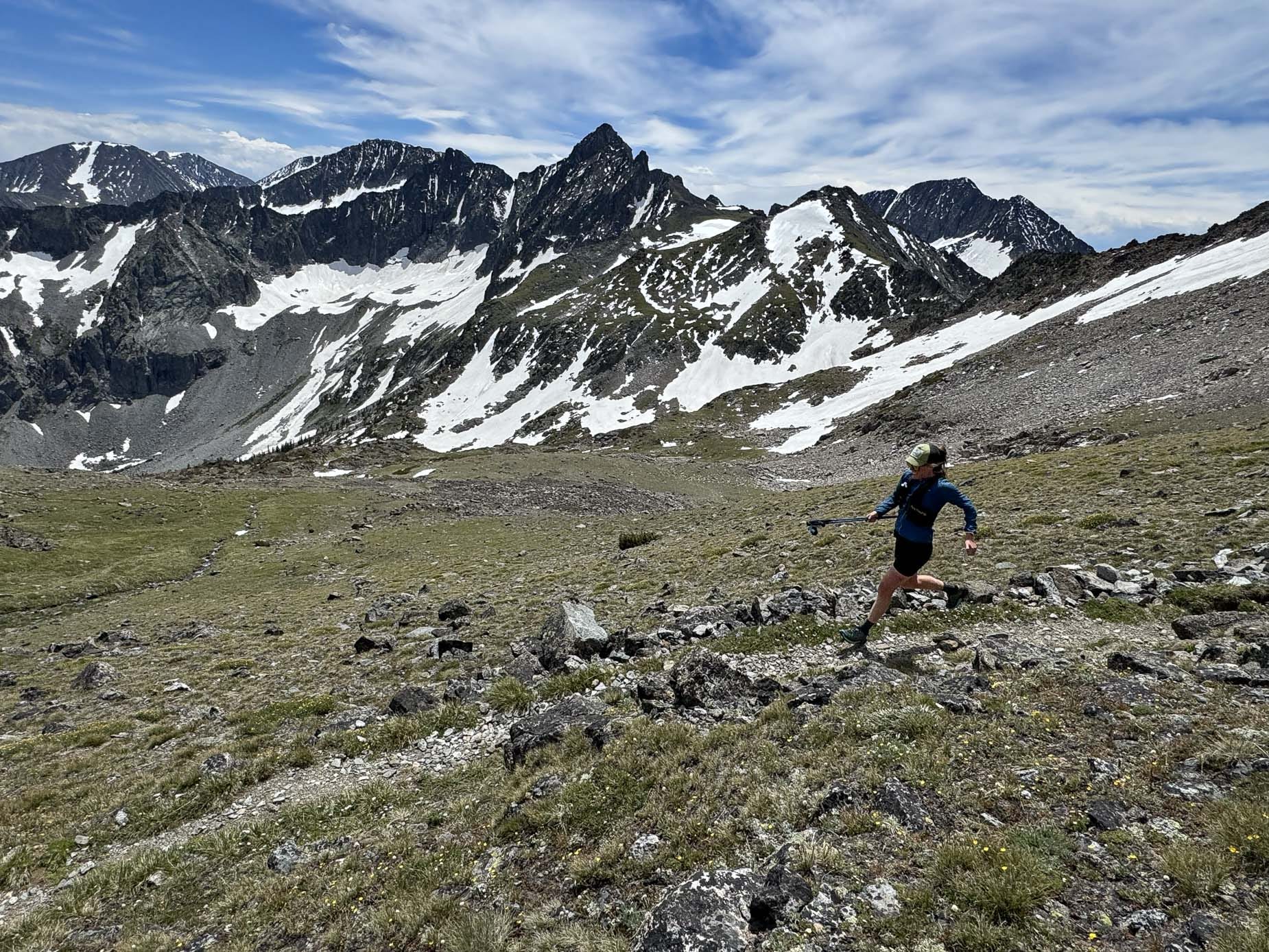
I’ve been thinking about this concept over the past week because I am trying to understand how everything came together so damned perfectly for Blair’s big day out at the Crazy Mountain 100. Ahead of some previous long endurance efforts I think she was overtrained, worn out by the accumulation of training stress, plus work and travel. Few athletes can control their schedules to the degree they want to, and the self-employed have a really tough time. A last-minute job at sea level right before a high altitude race? Yeah, that’ll affect one’s condition. And how do we factor that into the recovery process, the pre-race taper? How does one rest and recharge while watching hard-earned fitness and preparation leak away?
Refilling a repeatedly emptied tank takes time, focus, and some forgiving or restraining self-talk. Once in the habit of training with a particular volume, intensity and frequency it is difficult to just walk away, and it’s also hard to know with any certainty how to de-load to prepare for an upcoming performance. Tapering for an event provides the athlete with plenty of time to question everything that has happened but can no longer be changed; did I do enough volume to run 100 miles and will the passive heat adaptation training work and is my stomach trained well enough to assimilate all of the calories I will put in during the race? Unanswerable questions, all, and yet they nag and wake and prod.
In the lexicon of training for a 100-mile foot race a half-distance effort is often counseled 4-5 weeks beforehand with the post-effort gap before the race depending on one’s (lifetime) training history and ability to recover. How long it might take to recover and sharpen up after overreaching is difficult to predict, and getting it right the first time is largely accidental; it takes practice. Blair has been practicing for a couple of decades and has enough experience to coach herself through the whole process (and it has been wonderful to witness). Seven weeks before the Crazy Mountain 100 Blair entered the 50-mile distance at the Scout Mountain Ultra. She went into it with a lot of miles and vertical gain in her legs, feeling a little beat down, and to make it harder, conditions were almost record-breakingly hot. Going into the event already in a deficit is the classic definition of overreaching and its impact on fitness — when followed by a long enough recovery period to allow super compensation — can be extraordinary.
In the past, when I was training people in the gym, many of them fighters of one sort or another I had to address the risk of overtraining because their technical practice at the dojo affected, and was affected by what we did in the gym.
Short-term overtraining (and/or under-recovering or underfeeding, etc.) is easily illustrated by acknowledging the difference between can’t and won’t. Some days a player can’t do the prescribed task. Other days he or she simply won’t do the task. I would get nervous when several can’t days came up despite attempts to recover and re-feed. For me, can’t results from overtraining and needs serious attention, and rest. A few days of won’t are also cause for thinking because these usually result from psychological issues, and may indeed be related to physical problems: training volume, frequency, neurological demand, and intensity, combined with outside stress … etc. But won’t often goes away with a firm talking-to or a big lunch, while can’t doesn’t respond to such niceties.
Overreaching is, however, intentional, and a very powerful tool when used correctly, with adequate stress, enough recovery, and timed appropriately to produce a peak or super-compensation coincident with a major competition. Overtraining “happens”. Overreaching is caused.
This is perhaps the simplest description of the concept and process I have ever read. Written by Edward Borysewicz (Eddie B) in his 1985 book titled “Bicycle Road Racing”, it is not specific to any particular sport, instead it is applied to the human organism.
“Think of the body as a factory. If the usual demand is for 500 items a day, the factory produces that very comfortably. When an order comes in for 800 a day, the factory starts working harder. When demand climbs to 1,000 a day, the factory is at near-maximum production. When the order hits 1,200 a day, the machinery is shaking and ready to break. It can’t keep up. Then, all of a sudden, the orders stop. No more demand. But intense production doesn’t end so fast and that creates excess items. These go into storage, building a reserve that can be used to fill future needs. In the same way, the body increases energy production to answer the demand caused by very hard training day after day. When this training suddenly ceases, energy is replenished and the overflow is stored, increasing the body’s potential for work. This is sometimes called ‘super-compensation.’ Now we have the complete equation: First there must be super-work, then there must be super-rest. However, if the demand for energy does not restart soon enough, the increased production will stop and the energy level will return to normal.”
Blair had a terrible experience at Scout Mountain; within a few miles of starting she could tell her tank was empty, by mile 13 she wanted to drop. She also knew that continuing to dig the hole would benefit her seven weeks later if she recovered well afterwards. Everything hurt. Heat was crushing. Attitude spiraled down. And she kept going. She was learning. But she was also considering her first ever DNF in 30 years of competition and that’s a big monster to wrestle out there on the trail. I urged her not to stop when she came through the one aid station where I could see her, at mile 30. She kept running. The sun arced higher, burning, welding once-supple muscles into solid blocks of agony. Then, near the top of Scout Mountain itself, with 43 miles in her legs, she decided that 48 would be enough (I could pick her up from an aid station there). It broke my heart to see her in that much pain. It was the right call. The Big Fir aid station is actually six miles from the finish line because the terrain dictates the 50-mile course covers 54 miles but continuing didn’t make sense within the overall plan.
In the following weeks Blair reduced her mileage, rested and ate, stretched, went to the gym a bit, worked and slept. During the respite she came to understand that we all love her and care about her and it doesn’t depend on any performance or outcome; we see the ‘try hard’, we see her heart, her spirit, we feel her love and care for us ... a DNF? Well, we know she went as deep as she can and could because that’s what Blair Speed does.
Four weeks after Scout she and Peder, who would pace her for part of the race, did two, back-to-back, 20-mile days on the course to preview some terrain and stack some volume before backing off again. About three weeks before the Crazy Mountain race she began passive heat training, hitting the sauna 3-5 times per week. Mileage stayed low, punctuated with some short bouts of intensity, mostly on the treadmill where the stress is most controllable. She banked sleep. She spent good social time with family. We ate well. She super-compensated from the overreaching, and during the downtime prepped all of her food and hydration, typed out a race plan, shared her ideas with her pacers, meditated, journeyed, communed with the spirits she invited to join her. Then, with everything that could be controlled handled, she let go.
We woke up at 3:30am on race day after a fitful night. We drove to the start line. I had never seen her in a better place before an event. Everything felt light, with no weight of expectation, nothing anchored to any outcome. We never talked numbers, places, total time. We each had our own ideas, of course, but neither of us were attached to any of it. All she had said about what might happen was, “I think I can have a good race.”
And she did.
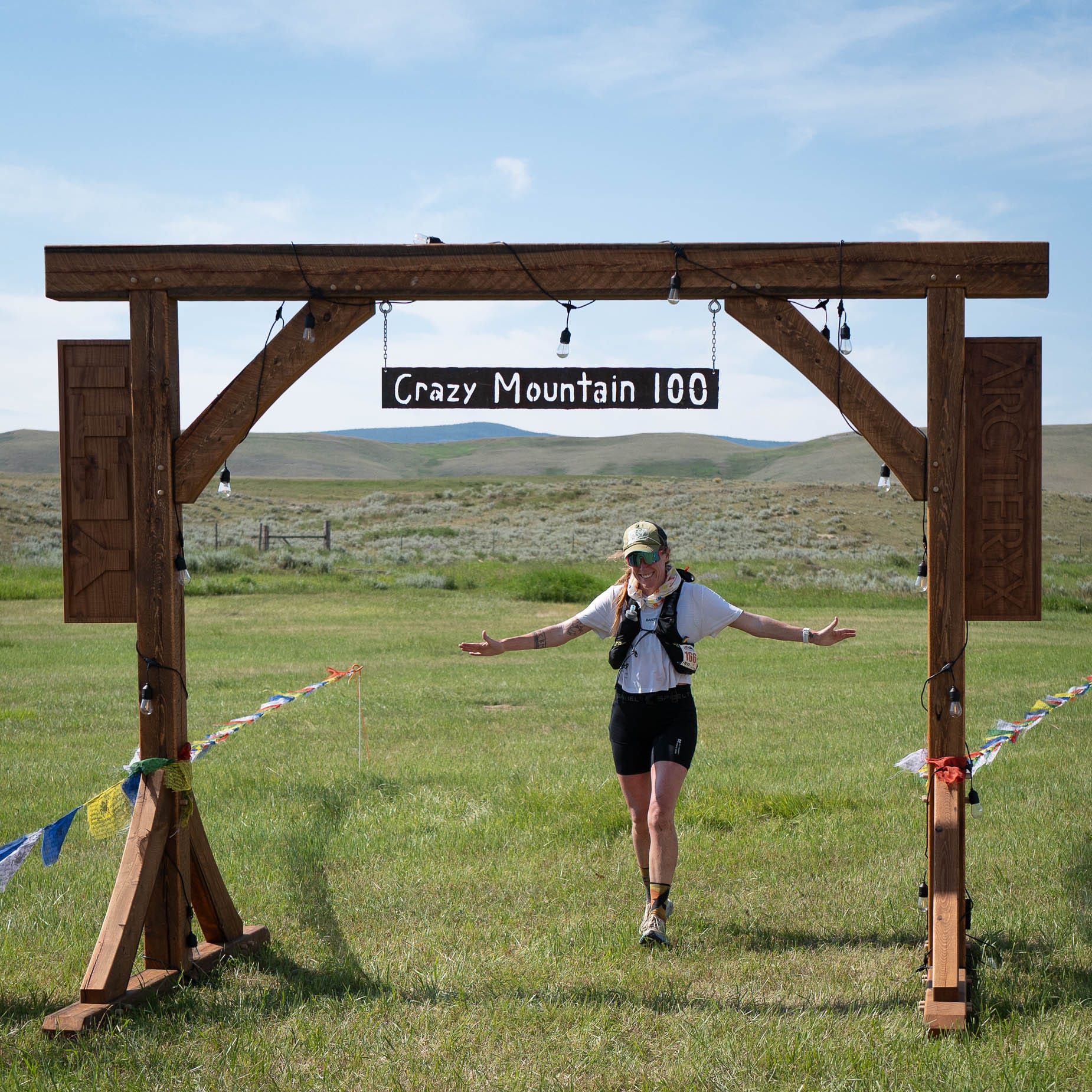
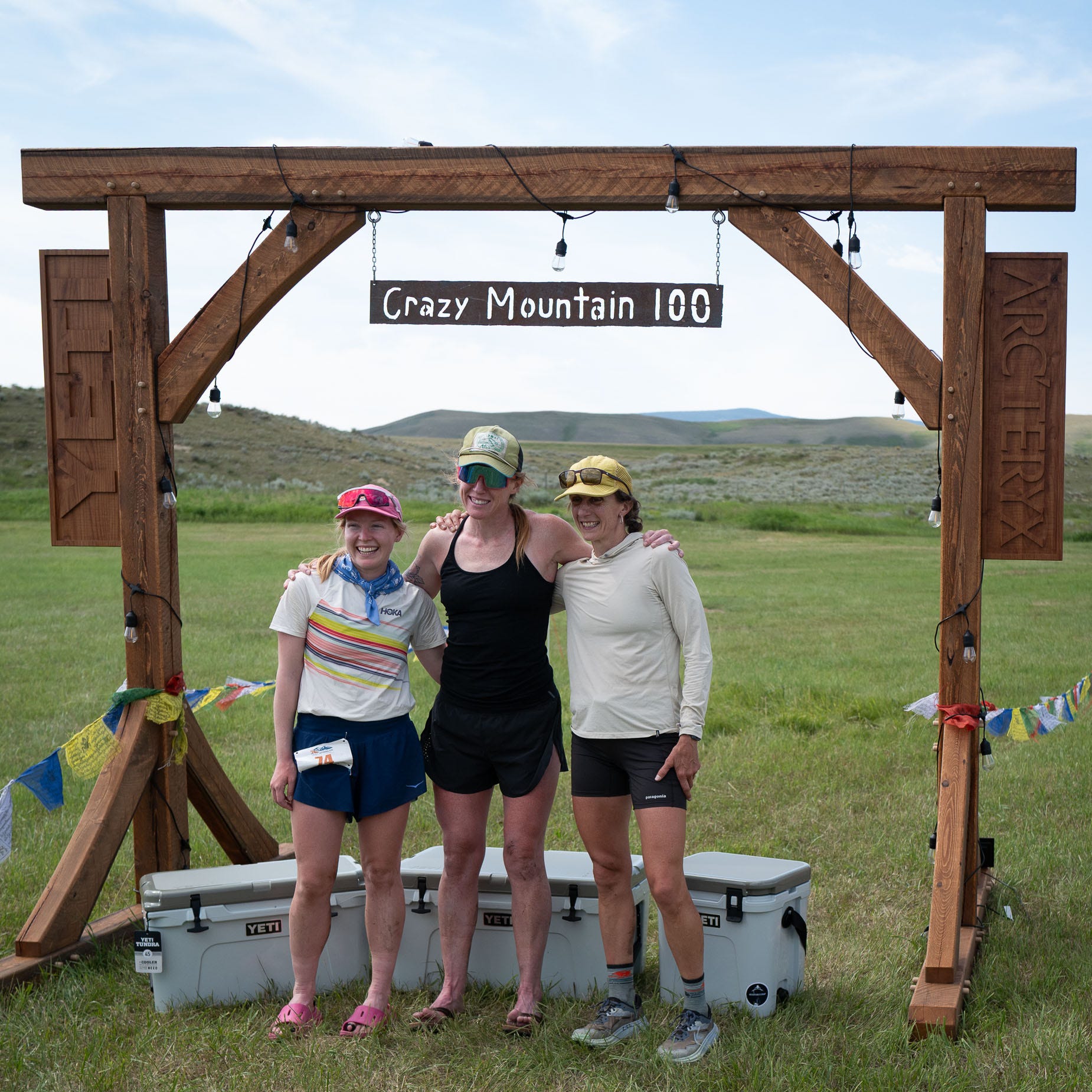
P.S. I will write about the journey from my “crew chief” perspective once I finish a couple of other pieces … and Blair Speed will most certainly do so as the experience and emotions accrete and coalesce.

This may be some of the the most useful insight to training for ultra running events I’ve read. Many would benefit significantly from the lessons shared here. I especially appreciate the idea of digging a hole that she would benefit from later AND the importance of rest, recovery, and social life post digging. As for Blair, what an inspiring chapter written for those of us here in earth school. Embracing the process, digging deep, and letting go, and all of it coalescing into a magic trip through the crazies. It is all so beautiful!
Loved this. I’m seven weeks out from my own 50-miler and currently feeling somewhere between deep in the work and deep in the hole. There is always that nagging uncertainty about whether the accumulated fatigue is productive, whether I’ve done enough, or whether I’ve simply buried myself too far to climb back out. This was a timely reminder that the digging is only half the equation. The harder part might be trusting the work, stepping back, and giving the body and mind enough space to actually absorb it.
I really liked the distinction between can’t and won’t, as well as the idea that a good taper creates almost too much space to question every decision that came before it. There is no real way to know whether you got the balance right until race day. At some point, you just have to accept what has been done, control what is still controllable, and then let go.
Massive stoke for Blair. To come through the experience at Scout Mountain, recognize it for what it was, recover with intention, and then arrive at the start line feeling light and not attached to the outcome is incredible. What a race, and what a beautiful reflection on all the work, care, experience, and belief that came together to make it possible. All 🫀 and ❤️