
The Rope Between Us
The rope was never an illusion, and it remains an unbreakable bond

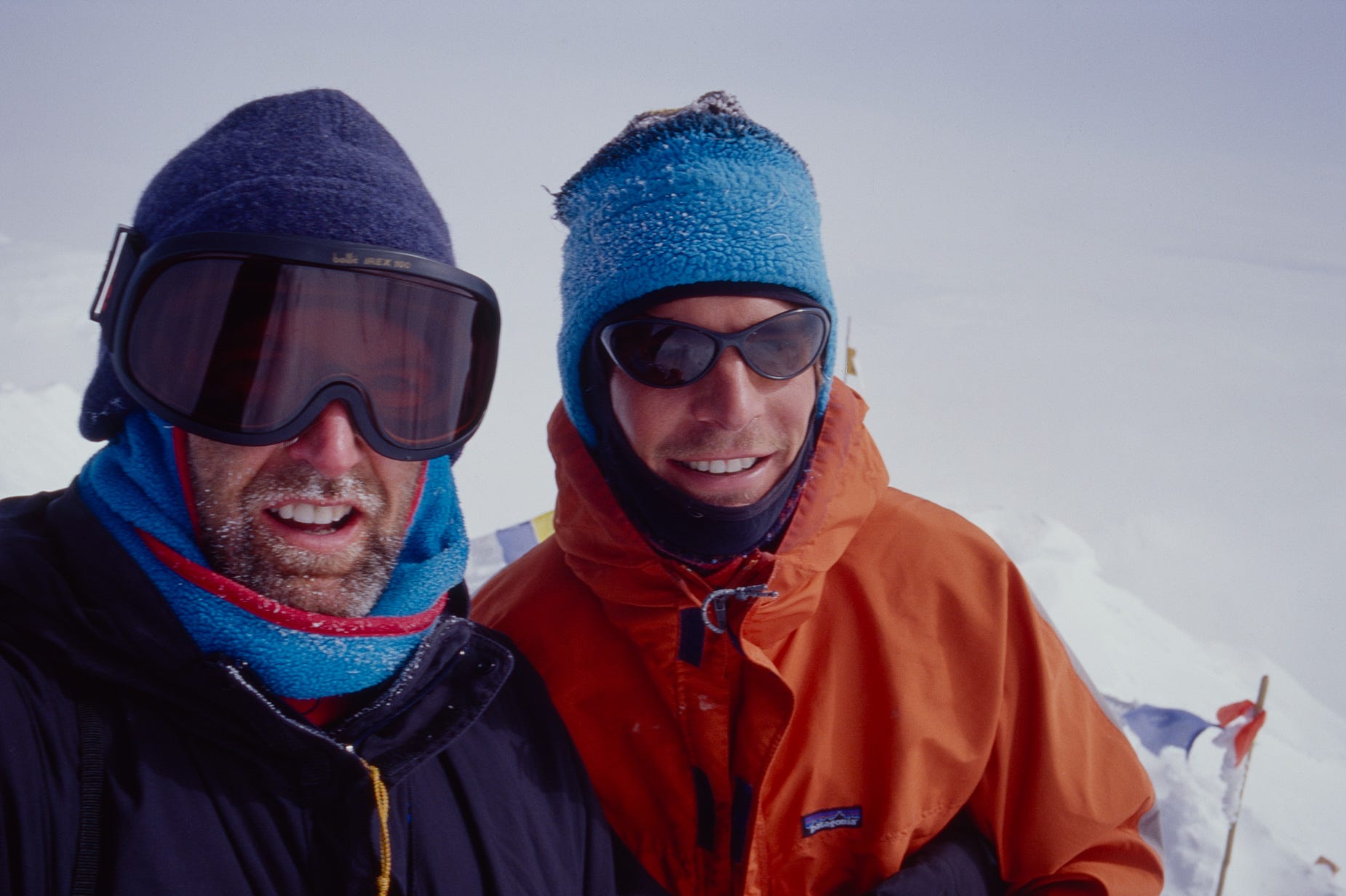
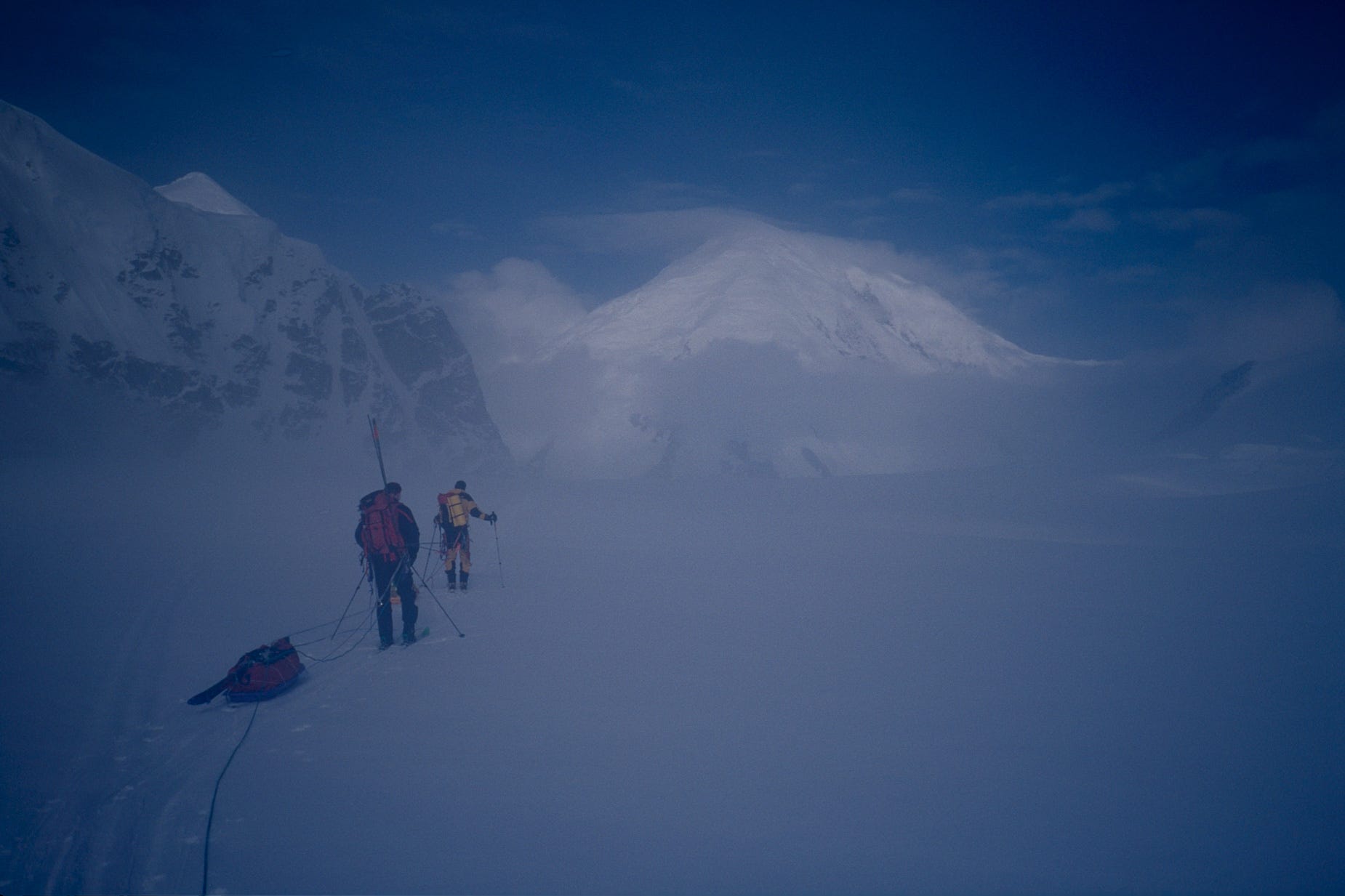
Certain songs trigger a flash of images, some captured on film and others indelibly coded into the softdrive of my mind. I hear the opening riffs of “Brimstone Rock” by 16 Horsepower I see stopped moments from March of 1998 when Steve House, Jonny Blitz and I visited a very cold Alaska Range. “Be There” by The Wipers transports me to a collage of images from the Slovak Direct, specifically in the aftermath when we knew we had gotten away with it, that we would survive, the fight finished while a few hours of toil remained. And the excerpt from a medley by The Mermen titled “A Kiss” buries me in the feeling of parting, saying goodbye in Talkeetna, and later realizing how momentous that rushed farewell was, what we had done, and how it had changed us, shaping our lives ahead.
Tying in to the climbing rope is a powerful physical gesture, a declaration of trust, and of submission to what nature and the mountain might offer, of facing all of that together. We can never know what tying the knot that first time could mean in the future, or understand how strong the bond might be, how it may endure. Sometimes we treat the act casually and sometimes we honor it, recognizing all that it symbolizes, and all that has passed along the rope between the hands and hearts at each end of it.
I closed this story with an image of Steve and Scott Backes descending the East Fork of the Kahiltna Glacier after recovering our gear from below the south face of Denali because it seemed fitting. It was the last time we three tied in to a rope together, skiing into the mist of whatever futures we each might discover ahead; Scott to start a family, me to quit climbing and turn towards shooting and training and teaching, Steve to use the Slovak as a launchpad for an incredible series of ascents, and the writing inspired by them. The rope was never an illusion, and it remains an unbreakable bond between us.
/
While I was writing this Steve sent me several hundred images to use for illustration. I was blown away; some I had seen but many I hadn’t or only in low-rez form. I built a PDF for paying subscribers with this essay as the skeleton, and 40 additional images accompanied by long captions. I will send that PDF out in a few days. For now enjoy the (three-hour) conversation we recorded here.
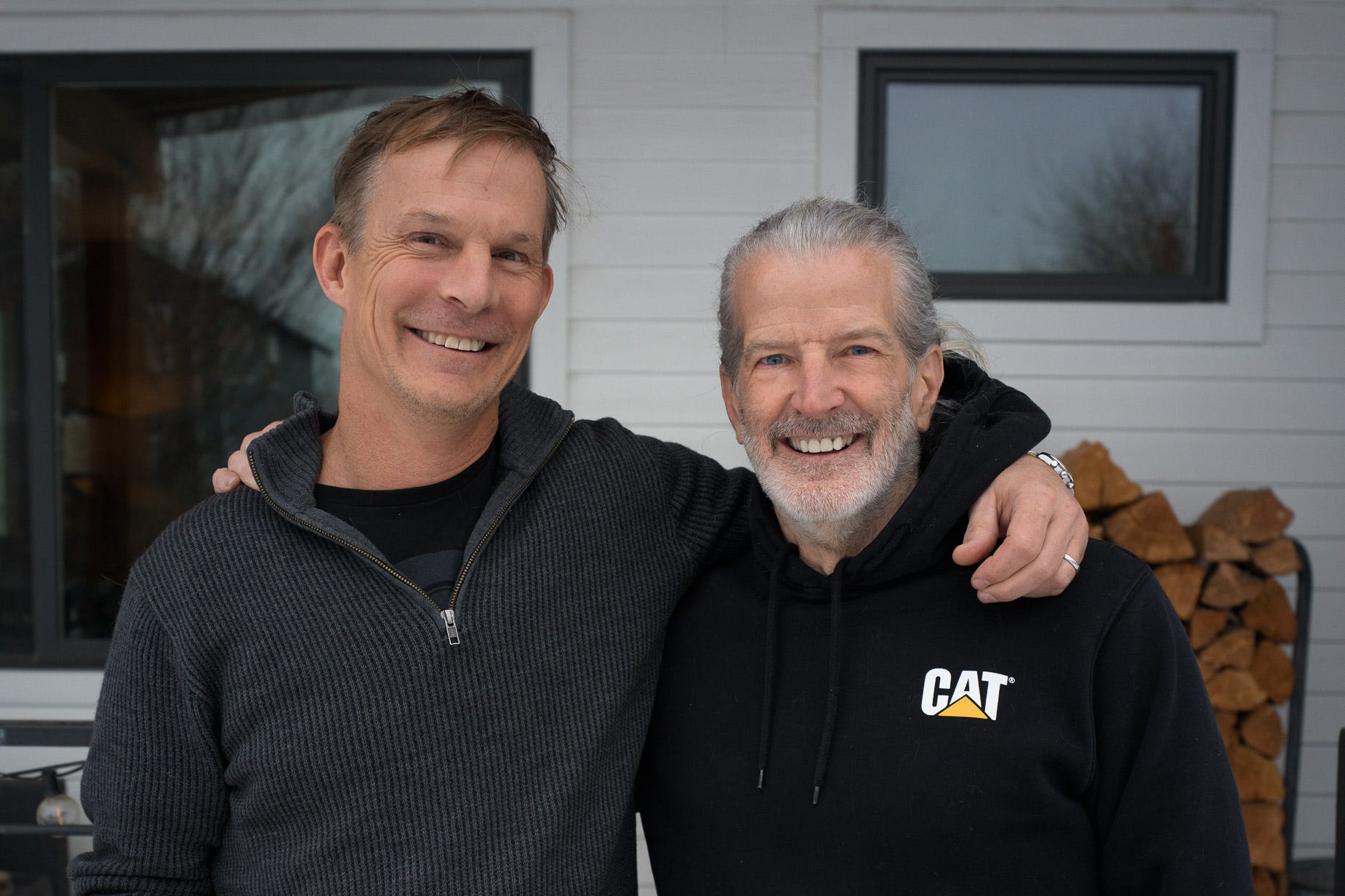
When Steve House visited in December 2025 we hadn’t seen each other for nine years. The realization shocked us. Distance separates, of course — an ocean is not merely geographically wide — but we are living different seasons of life so time plays a role too. When we crashed together in a life- and love-affirming hug in the airport it felt like we had never been apart at all.
Both of us were climbers, and climbing shaped us, but as similar as we are, our respective careers were different. His was sweeping, a broad swath informed by, and cut through tradition — an outcome influenced by temperament, of course, and also decisions relevant to his ambition to become the greatest climber in the world. I also think it resulted from the extremely wide and diverse range of partners he climbed with. His partnerships were varied and many; Barry, Alex, JoJo, Jeff, Bruce, Steve, Marko, Rolo, Eli, Colin, Vince, Scott, and me. He climbed in Alaska, the Canadian Rockies, Himalayas, Karakoram, Andes, the Alps, and ... Smith Rocks. I think this breadth reflects his temperament, and how he lives and moves in the world.
I was less promiscuous, having true partnerships with only Randy, Barry, Scott and Steve. I’m not sure what was cause and what was effect but my temperament sought depth in relationship while also limiting my commitment to partners who proved they would not abandon me. My terrain choice was also narrow; after a fling with the Himalayas in the ‘80s I limited my focus to the Alps and Alaska. I’d have been a different climber and man had my lens been able to take in a wider view.
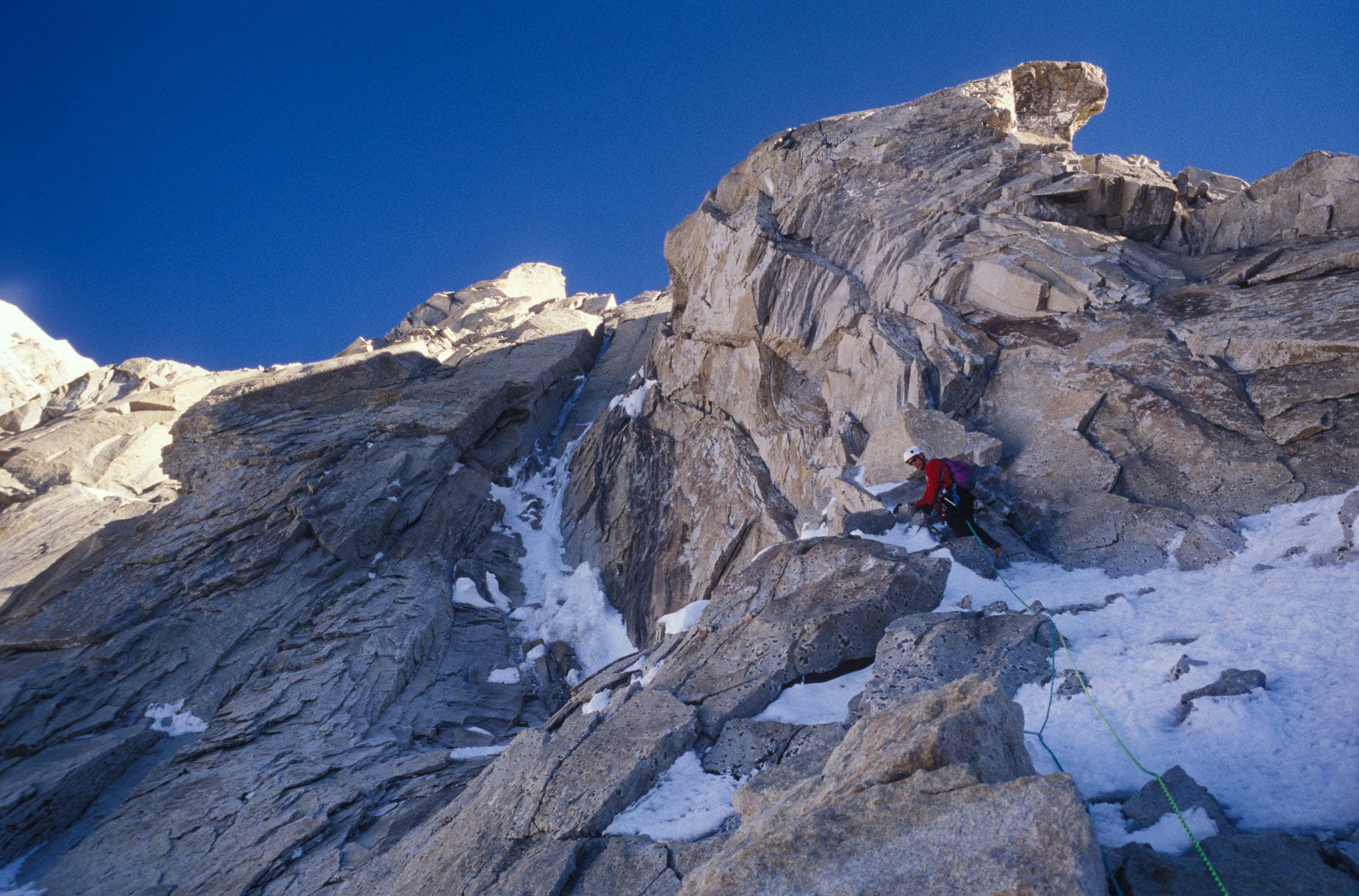
Our trajectories overlapped while I was close to the apogee of mine and he was rocketing through his second stage burn, breaking free of gravity. We soared and learned together for a brief flight, the mentorship going both ways. The first climb we ever did together was a new route in Alaska, in the winter, a trial by intensely cold fire if ever there was one. The first days on the glacier were so cold the cheap thermometer broke. Being the only ones around, we had to dial back our risk tolerance, which led to the only hiccup of our first date. On the 14th pitch Steve snapped off a free-hanging icicle and rode it groundward, stopped by the rope just short of an ice ledge. I was pissed because rescue wasn’t possible and an injury could be terminal. I shouted, “You can’t be doing that shit up here!” Once the tension subsided we recovered our stoke and Steve remounted, leading one of the hardest, wildest pitches I have ever seen in the mountains. Difficult, shared experience formed an unbreakable bond between us.
Two years later, I wrote that I was helping orchestrate Steve’s sellout; teaching him to build multimedia shows, introducing him to possible sponsors, encouraging media presence, all things a purist hopes to reject but also cannot live without. Or couldn’t in that era with our understanding at the time. Years afterwards I understood that making a living from (and for) one’s great passion is not selling out, it is a way to keep focused on that passion, to immerse oneself in it, to live and breathe it and to return from singular experience to share what had been seen and learned. We carry hunger into the mountains and the weight of its satisfaction when we come down; lessons, relationships, accomplishment, failure, love and loss, strength and weakness, and ambition so hot it could immolate the Self, or leave it dead on the side of a mountain. There could be a long fall and crushing stop against a snow-covered ledge, and everything that flashes through heart and mind in that short, too-long flight — it would have been a sellout NOT to return and share those stories.
Sometimes we shouted our stories because, after all, “soft-spoken changes nothing,” certainly not ourselves, but the volume and stridency of our messages affected their reception. Now, I look back and see those outbursts as signals to the like-minded, as invitations to demand more of oneself, and perhaps assurance that stepping out of (or confronting) the mainstream does not end with isolation and rejection but can instead drive one’s creativity and open heart and mind to new experience. I think we shouted because we wanted others to know deeper recesses exist, to know they can draw on those resources to overcome limitations imposed by the words or actions of others (society, so-called heroes or influencers, etc). Sometimes we communicated poorly, sometimes we struck a bell that is still ringing.
When exploring new territory in the mountains we often bump up against the limits of imagination. Steve’s limits were expansive. He saw possibility where others did not. His three attempts to solo a new route, and the second overall ascent, of K7 (6935m) in 2003, and his eventual success on that route one year later demonstrated how far ahead he could see. With that climb, he turned a perceptive declaration into action, “the simpler we make things, the richer the experiences become.” And it was his search for transformative experience that led him to attempt a new route on a 22,750 foot-high mountain, carrying very little technology that might insulate him from the mountain itself. Simple. Spare. Solo.
His imagination and belief in himself led to his career high-point, a new route on the Central Pillar of Nanga Parbat’s Rupal Face, in pure and very lightweight alpine style, partnered by Vince Anderson. The Rupal happens to be the tallest face in the world, rearing up over 14,000’ from base camp, and requiring three months for a large team to make its first ascent.
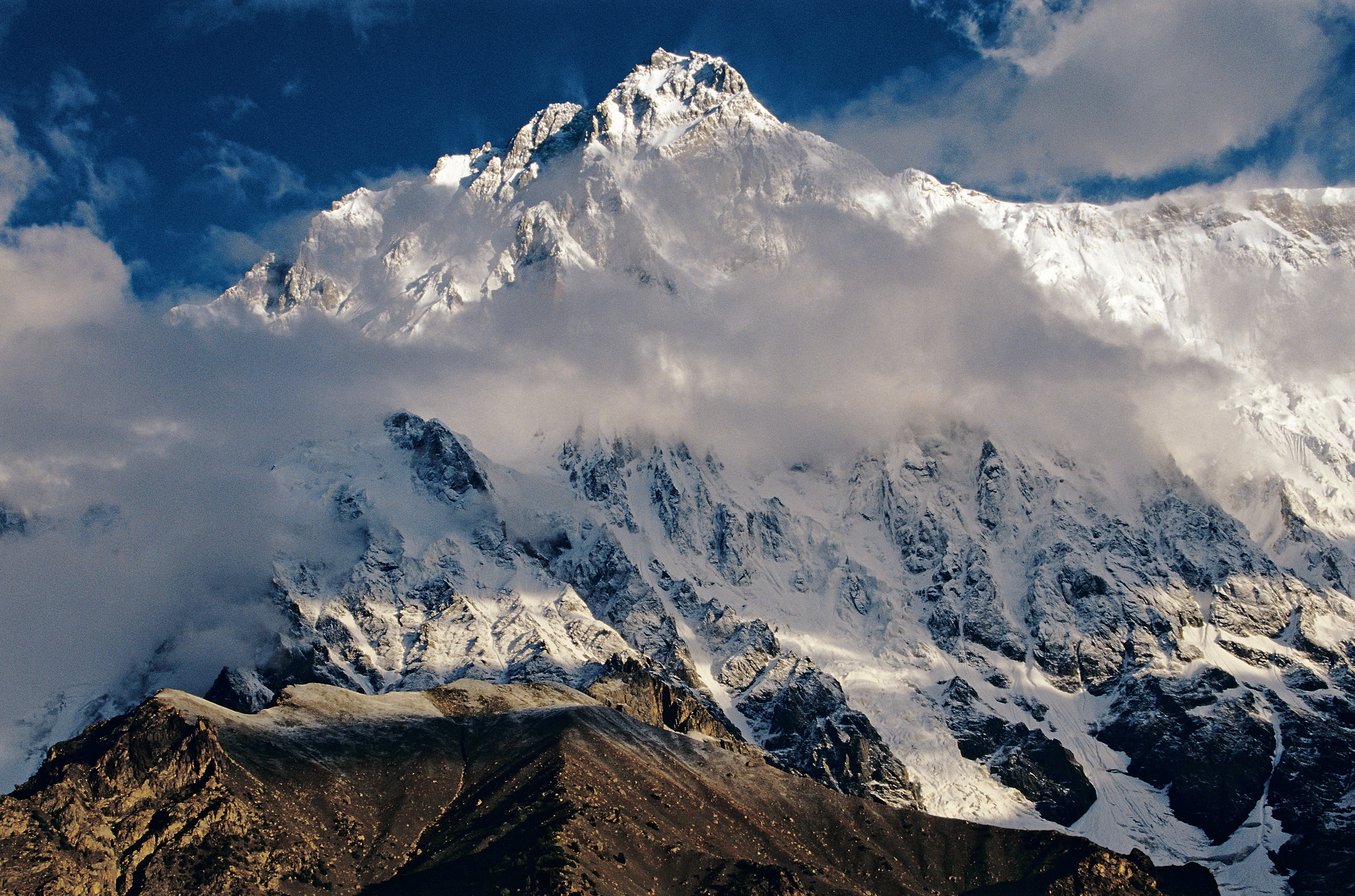
The year before he and Vince succeeded Steve had climbed to 7500m on the face with Bruce Miller before being stopped by, “a chest infection, complicated by the altitude.” In a harrowing retreat through consistent rockfall and deep cloud, the pair descended new terrain, unable to locate the exact line of the Messner Route. Over the next few months Steve confronted the extreme nature of his ambition, and the risk of pushing too far. Doing so alone is one thing, entraining another person on that journey is another. He focused, left as little to chance as possible, prepared meticulously, and returned the following year with Vince.
Starting up such an enormous wall carrying less than 25 pounds could be the definition of hubris but that would be inaccurate. Instead, the pair’s confidence was born of years of experience, of exploration, testing and preparation. That they succeeded, making the round-trip up and down the very difficult route (M5 X, 5.9, WI4) in eight days, validated those years of practice and self-belief. Steve envisioned and executed what others could not.
On the back side of every peak is a downhill slope, an off-ramp, a narrow, eroded gorge leading to the valley, to safety, and perhaps, new opportunity. Some sequester themselves in that valley, living a life of quiet contemplation; a deserved respite, yes, but also a cul de sac. Others move through the valley towards a different calling.
To do nothing more after the climbing was done, summits were reached, descents survived, and the stories were told would have been a waste. As I reentered the atmosphere to share my stories and continue seeking along different routes Steve left gravity’s embrace for a time, stacking success on top of success, integrating failure into his understanding, tending the fire of ambition, and becoming evermore learned and capable. We stayed in contact, waving and talking briefly as we traveled in different directions. The shouting quieted, becoming measured, thoughtful, and more useful. Just as we did.
Being generally reflective and self-interrogative, our friendship has always been quiet, and calm, without the clash that sometimes occurs when similar personalities meet, though also without the explosive mirth that erupts when Scott and I share an inside, years-in-the-making joke or cultural reference. Of course, Steve and I can (still) trigger each others’ creativity and ambition, pushing the undercurrent to surface in an overtly social, white-capped wave but more often than not our interactions are tidal, and our relationship subtle. We roll with the swell.
It was apparent in December that we share the similarity of constant search, and renewable areas of focus, which I believe is driven by the dissatisfaction we both experienced upon reaching a summit or achieving a goal. Messner said that, “each goal achieved is equally a dream destroyed,” which Steve echoed in the video short, “Shattered”, wherein he describes reaching the pinnacle of success only to find it empty, to realize he had no home to return to from that height, and nothing left after having given his all.
In that condition he could not be finished searching, or seeking. It’s habit, of course, ironed in by decades of practice, but also the only means of discovering the source of emptiness, and perhaps the means to fill it. In that same video Steve admitted that his deepest fear was that he “isn’t worthy of love” but he kept seeking it. And in that we are also similar; I sought love without knowing how to, and sabotaged relationships to ensure I left first instead of being abandoned. And when love disguised the ulterior motive of changing me and my ambition and my work into something more manageable, and controllable, I reacted strongly. Still, I too kept seeking, and over time I learned the how, discovered the who, and in the five years Blair and I have been together, I have become a different man.
While Steve and I have not spoken much about his relationships, I do understand how a driven, focused and intense man may be considered selfish and inconsiderate. I never saw him as that, and always appreciated how, in conversation, even when he and I were intensely focused, he included whoever else was present, inviting them to join in. He listens and responds, he pays attention. Perhaps he wasn’t that sincere and open when he was consumed by climbing but I was actually moved to examine my own behavior in relationship to others after witnessing him be himself in social situations. Maybe he changed when he quit climbing, but maybe his care, compassion and sensitivity were just masked by ambition, to be revealed later as his imperatives shifted toward family, friends, and new work.
Steve is no stranger to work, and working hard. In each iteration or branch of his life he has been 100% committed. At one point that meant climbing as much as possible, training over 800 hours per year, developing and testing and refining the tools of his trade, and learning. I always saw him as a student so I was not surprised to see the teacher and coach emerge from inside. Again, if you’ve been to the edge and fought the cyclops so to speak it would be a waste to keep the wisdom earned on that journey to yourself. Steve’s desire to share the fruits of his research, practice, and experience is genuine — he wants to do the coaching (while many others just want to be seen as a coach).
That we both found our way to training and teaching others post-climbing still makes me smile. We learned in similar ways; adapting and practicing different methods to make them more specific to alpinism. The consequences of falling short in the mountains made us pay careful attention, they made the training important, and gave our knowledge of it great value. Steve built his business on the foundation of that experience which he describes in his books, “Training For The New Alpinism” and “Training For The Uphill Athlete”.
Ten years ago we placed emphasis differently; Steve on the work itself and ordering it correctly while I focused on the psychology, on getting people to do meaningful work at all. I suspect we probably agree on more than we don’t now after years of teaching and being taught by our students has distilled what’s important. I believe if we cloned ourselves so we could do more, we might write the final word on training for alpine climbing but sadly, our capacity is finite.
These days I am inspired by Steve’s persistence. He has applied the same constant inquiry and practice to training and coaching that he aimed at climbing. And here too our similarities differ in that he has engaged more and varied partners and coaches, and adapted his thesis to a broader range of clients. He is methodical and meticulous while I was mercurial, driven, and dearly wed to trial and error. Where he has built up the riverbanks to steer its course I flowed with the water, feeding myself from it as I swam. His practice is deliberate while mine was organic, or natural, a response instead of an intent ... and that pretty much describes how we climbed mountains as well.
I love the Steve I knew and know as a climber, tagging along sometimes and later, simply observing. I also love the Steve who used those experiences to shape a philosophy for living, for loving, for leading. His current exploration of the internal human landscape, in conversation with climbing peers, mentors, business and human performance leaders on his “Voice of the Mountains” podcast is, in my opinion, his most important professional work. The care and sensitivity he brings, the diligent and thoughtful preparation, his guidance during the conversations, sometimes steering a guest into territory they would not have explored without a push, are all signs of a great observer and leader. Steve is marked and scarred by experience but he never broke, didn’t quit, he kept looking around the corner when confronting impassable barriers head-on. His resourcefulness and problem-solving ability has always been inspiring.
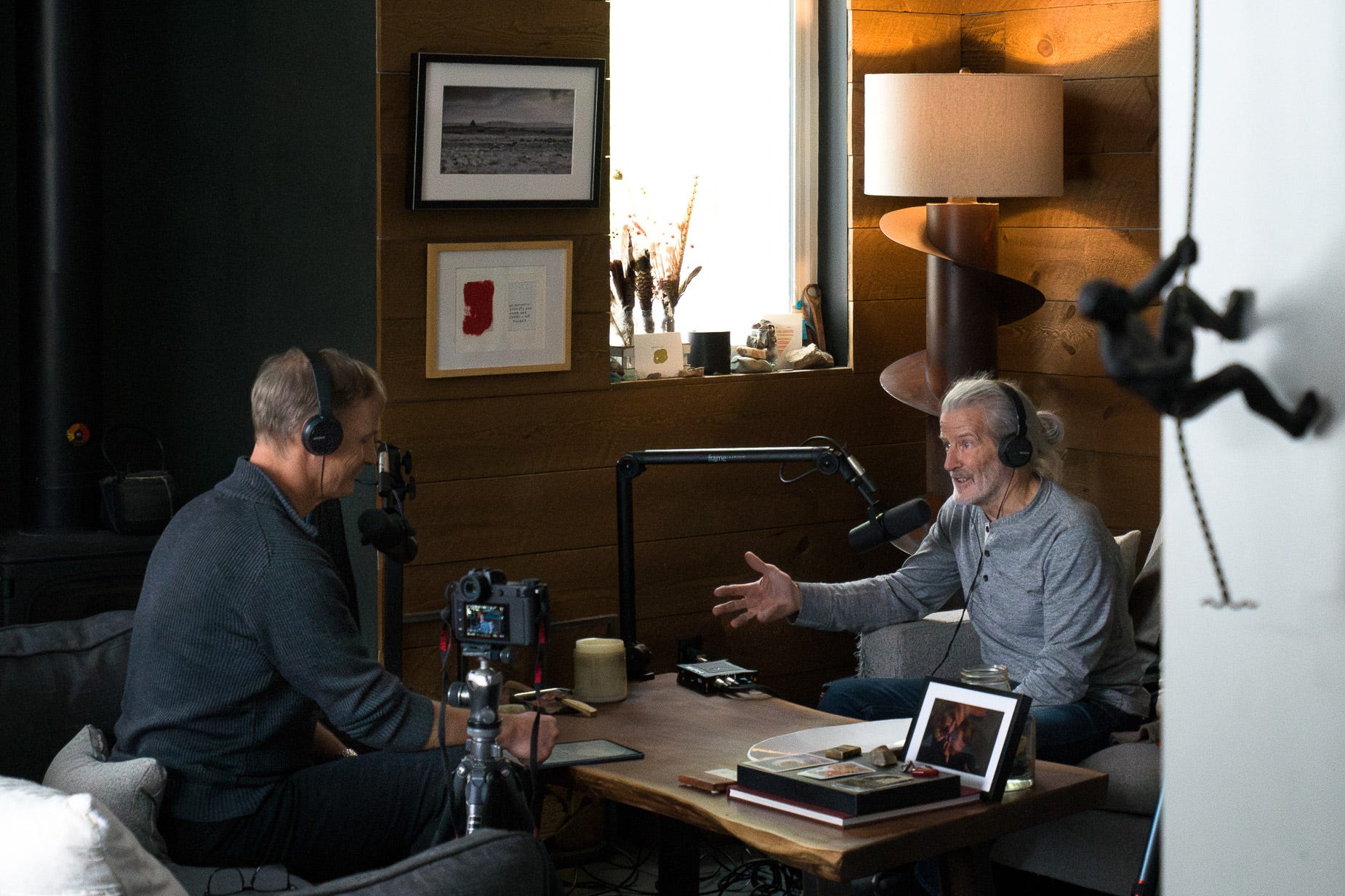
Steve wrote that, when we sat down to record a conversation, he “wasn’t sitting in front of a myth as much as a mirror” and I would say the same. We are reflections of each other, distorted by origins, upbringing, time, culture, and experience yet still identifiable. Our similarities and differences are visible, what we shared has accreted, to shine stubbornly from within. That said our relationship has not been all rosy, after all we are human. Where our similarities connect us, our differences make us grow, and growth always comes with (or from) friction. Through the lens of maturity, and perspective, I now see that what drove us might not have been complicated at all. We were both looking for love, one wondering whether he deserved it, the other afraid to find it and then be abandoned. I realized, sitting across from each other in my home, that it was there, strung taut between us, all along. And regardless of time or distance, we are still tied-in to that rope.
Check out our conversation here.

That photo of the two of you recording the podcast is great! What are the items in the bottom right corner of the photo. Stones and tarot cards?